Category: Blogs

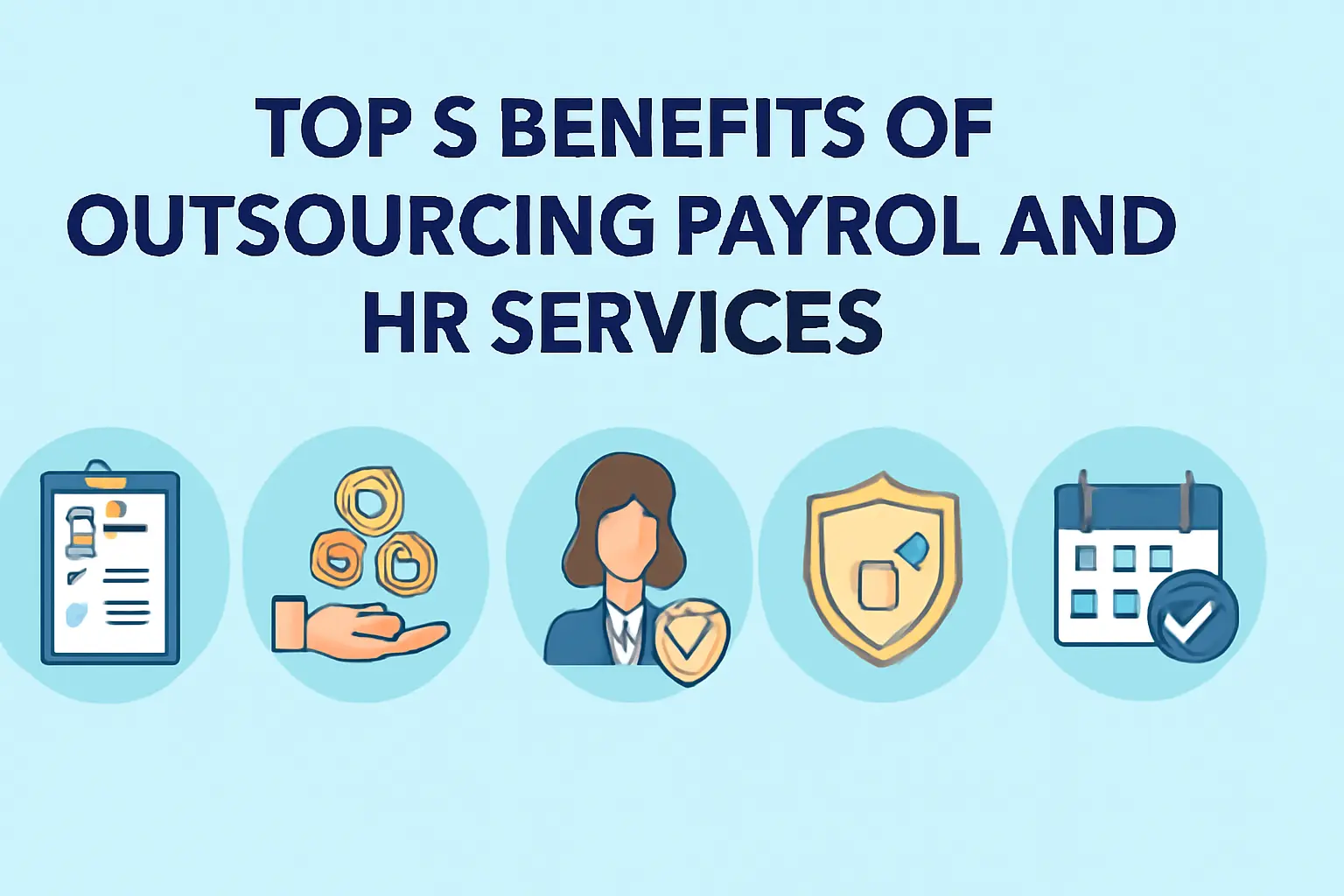
  • Top 5 Benefits of Outsourcing Payroll and HR Services

    Top 5 Benefits of Outsourcing Payroll and HR Services

    Payroll might look simple on the surface, but for most businesses — especially small and medium-sized enterprises (SMEs) — it is one of the most complex and high-stakes processes. Every error has consequences: missed salaries hurt employee trust, tax miscalculations result in penalties, and late filings can damage a company’s reputation. For SMEs with lean teams, managing payroll and HR internally often becomes overwhelming.

    That’s why more companies are turning to outsourced payroll and HR services as a smarter, more efficient solution. By outsourcing, businesses not only reduce administrative burdens but also gain the expertise and technology needed to run payroll with accuracy and compliance.

    The Complexity of Payroll and HR

    Payroll is about much more than issuing paychecks. It requires:

    • Accurate salary calculations and overtime tracking
    • Tax withholding and remittance to multiple authorities
    • Benefits management and pension contributions
    • Handling deductions, reimbursements, and bonuses
    • Staying compliant with ever-changing labor laws and regulations

    For SMEs, these requirements can quickly overwhelm in-house teams that already juggle multiple responsibilities. Even a single compliance mistake can lead to costly penalties.

    Top 5 Benefits of Outsourcing Payroll and HR

    1. Compliance and Risk Management

    Payroll regulations evolve constantly — from tax codes to employee benefit rules. Outsourced payroll providers ensure compliance with local and international standards, reducing the risk of errors or penalties. With Globirix, SMEs gain access to professionals who stay up to date with every change, ensuring filings are accurate and deadlines are met.

    2. Time Savings for Business Leaders

    Entrepreneurs and executives should focus on growing their businesses, not on reconciling payroll records. By outsourcing payroll, leadership teams reclaim valuable time that can be spent on sales, strategy, and customer relationships rather than administration.

    3. Accuracy and Reliability

    Manual payroll processing is prone to errors. Miscalculations not only frustrate employees but can also cost businesses in fines or back payments. Outsourcing ensures payroll is processed with professional-grade software and handled by specialists, reducing costly mistakes.

    4. Scalability and Flexibility

    As companies expand, payroll complexity increases. Adding new employees, managing remote teams, or entering new markets requires systems that can scale. Outsourced payroll services are designed to grow with the business, making expansion seamless.
  • Why Financial Modelling is Essential for Business Growth

    Why Financial Modelling is Essential for Business Growth

    Behind every successful business decision lies a reliable financial model. Whether it’s launching a new product, expanding into a new market, or securing investor funding, financial modelling provides the clarity leaders need to move forward with confidence. Without it, businesses risk making decisions based on intuition rather than data — a gamble most cannot afford.

    What is Financial Modelling?

    At its core, financial modelling is the process of creating a structured framework that projects a company’s financial performance. It blends historical data, present realities, and future assumptions to simulate outcomes under different conditions.

    Well-structured models answer questions such as:

    • Should we expand into a new market now, or wait another year?
    • How will raising capital or taking on debt affect long-term cash flow?
    • What does the best-case and worst-case scenario look like for our growth strategy?
    • At what point will we achieve break-even or profitability?

    In today’s fast-moving business environment, these insights are no longer “nice to have” — they are critical for survival and growth.

    Key Use Cases for Financial Modelling

    The applications of financial modelling go far beyond a simple spreadsheet. Companies use models to:

    • Forecasting & Budgeting: Project revenues, expenses, and profit margins to guide operations.
    • Scenario Analysis: Run “what-if” simulations (e.g., changes in pricing, raw material costs, or market demand) to plan for uncertainty.
    • Investor Presentations: Show potential investors how the business will grow under realistic assumptions, backed by data.
    • Business Valuation: Determine company value during mergers, acquisitions, or fundraising rounds.
    • Strategic Planning: Evaluate expansion into new geographies, product launches, or capital investments.
    • Cash Flow Management: Identify when shortfalls may occur and ensure liquidity planning.

    These use cases demonstrate why financial modelling is essential for business growth — it’s the bridge between ambition and actionable strategy.

    Why Many Businesses Struggle with Modelling

    Despite its importance, many SMEs and startups lack the in-house expertise to create robust financial models. Common challenges include:

    • Over-reliance on basic spreadsheets that miss key drivers.
    • Lack of advanced financial knowledge in areas like valuation or sensitivity analysis.
    • Insufficient time, as leadership is often consumed with operations.
    • Models that fail under investor scrutiny due to errors or unrealistic assumptions.

    This gap leaves businesses exposed to poor decision-making and reduced credibility with lenders or investors.

    Why Outsourcing Financial Modelling Makes Sense

    Building a strong financial model requires specialized skills in finance, accounting, and data analytics — skills that many SMEs cannot afford to maintain in-house. This is where outsourced financial modelling services provide real value:

    • Expertise: Access to professionals who understand advanced forecasting, scenario planning, and valuation techniques.
    • Cost Savings: Outsourcing provides high-quality modelling at a fraction of the cost of hiring a full-time CFO or financial analyst.
    • Speed & Accuracy: Dedicated experts build models faster and ensure they stand up to investor or auditor scrutiny.
    • Scalability: Businesses can engage support as needed — for fundraising, acquisitions, or strategic planning — without long-term commitments.

    At Globirix, we specialize in delivering investor-ready models that not only crunch numbers but also tell a compelling business story.

    Case Example

    A fast-growing technology startup partnered with Globirix to build a comprehensive financial model in preparation for a seed funding round. The model projected cash flows, identified risk factors, and provided realistic growth scenarios based on market data.

    When presented to investors, the model gave credibility to the startup’s growth story and highlighted the discipline of its leadership team. As a result, the company secured the funding it needed to scale — and has since grown its customer base significantly.

    Conclusion

    Financial modelling is no longer optional — it is essential. From startups seeking funding to SMEs planning expansion, the ability to model future outcomes is a competitive advantage. Without it, businesses risk flying blind.

    By partnering with outsourced experts like Globirix, companies gain accurate insights, investor-ready tools, and strategic clarity — all while keeping costs under control. In a world where every decision carries financial implications, a reliable model is the foundation for sustainable business growth.

  • Outsourced Accounting vs. Hiring In-House: Which is Right for Your Business?

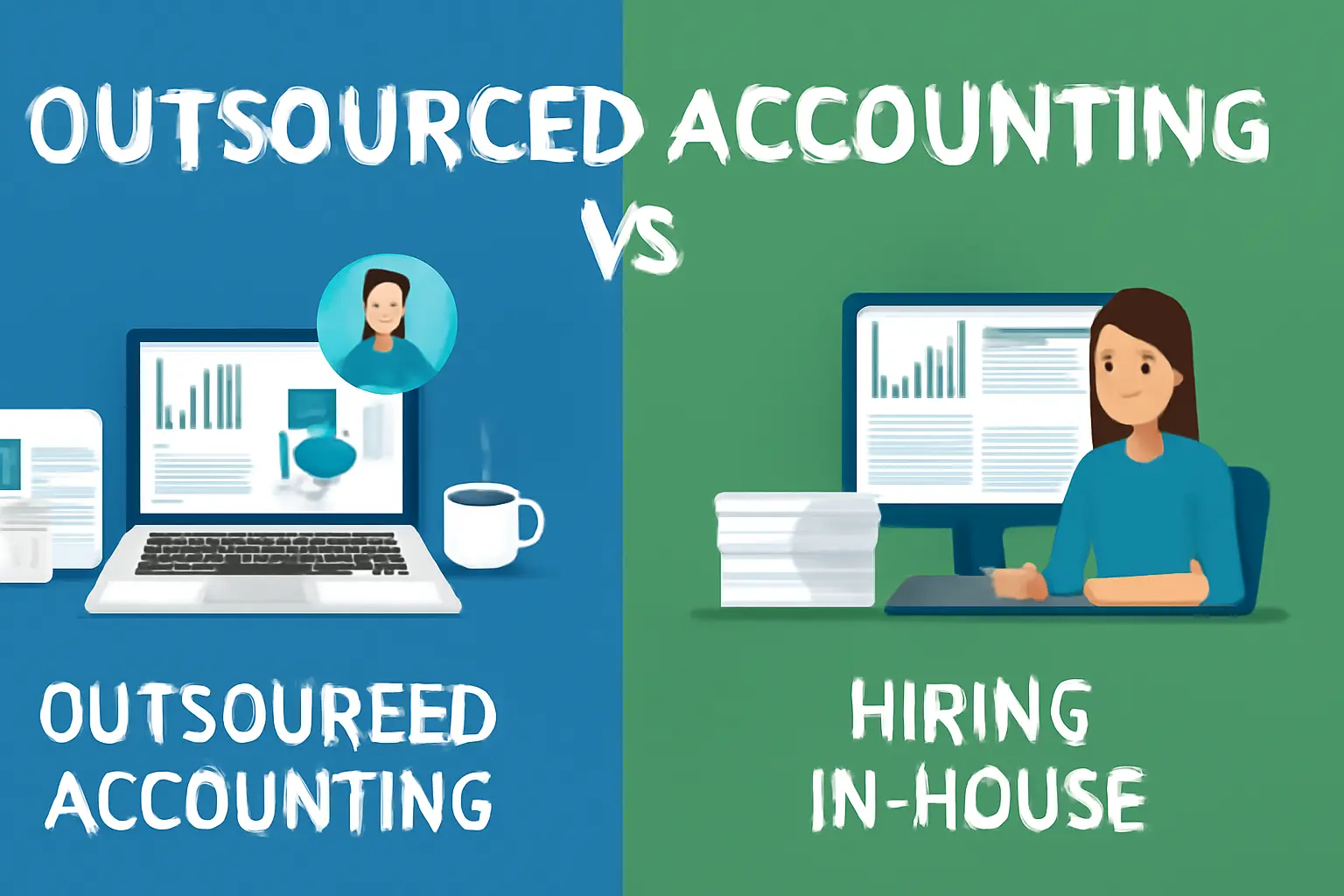
    Outsourced Accounting vs. Hiring In-House: Which is Right for Your Business?

    As businesses grow, one of the most important decisions they face is how to manage their finances. Should they build an internal accounting team, or should they look to outsourced accounting services for support? Each path has its own strengths and limitations. Increasingly, however, companies are discovering that hybrid solutions like Rent-a-Resource combine the best aspects of both.

    The True Cost of an In-House Accountant

    Hiring an in-house accountant offers a sense of control and familiarity. However, the costs extend far beyond salary. Businesses must also cover:

    • Benefits and pension contributions
    • Office space and equipment
    • Software licenses and upgrades
    • Ongoing training and compliance updates

    For SMEs, these expenses quickly add up, often making a dedicated internal finance team unsustainable in the early and mid-growth stages.

    Why Outsourced Accounting Services Appeal to SMEs

    By contrast, outsourced accounting operates on a flexible, pay-for-what-you-need basis. Instead of bearing fixed costs, businesses can scale their accounting functions depending on demand. For example:

    • During peak periods like tax season or audits, companies can add more resources.
    • During slower months, they can scale back without financial strain.

    This makes outsourced accounting one of the most cost-effective accounting solutions for SMEs and startups that need professional support without the overhead.

    Expertise and Scalability: Outsourcing’s Competitive Edge

    Another major advantage of accounting outsourcing is access to specialized expertise. While an in-house accountant may excel in day-to-day bookkeeping, outsourced teams bring diverse skills across:

    • Tax compliance and regulatory filings
    • Advanced financial modelling and forecasting
    • Management reporting and dashboards
    • Payroll administration and HR integration
    • Multi-jurisdiction accounting for global businesses

    As your company grows, outsourcing also provides seamless scalability. Need more accountants to handle an acquisition, expansion, or investor reporting? Outsourced providers like Globirix can ramp up resources quickly — something far harder to achieve with fixed internal teams.

    Confidentiality and Control: Addressing the Concerns

    One common hesitation around outsourced accounting services is data security. Business leaders fear losing control of sensitive financial information. At Globirix, we mitigate these concerns through:

    • Strict NDAs with every client engagement
    • Secure, encrypted platforms for data transfer
    • Tiered access controls to prevent unauthorized use
    • Continuous oversight and quality assurance

    This ensures that while work is outsourced, confidentiality and accuracy remain uncompromised. Clients retain full visibility into deliverables and timelines, often enjoying better financial transparency than with a small internal team.

    The Hybrid Solution: Rent-a-Resource

    The Rent-a-Resource model combines the stability of an in-house accountant with the flexibility of outsourcing. Businesses can rent accountants, bookkeepers, or financial analysts who function like part of their internal team but without the long-term overhead.

    Benefits include:

    • Direct oversight of accounting staff
    • Seamless integration into company workflows
    • Flexible commitment (project-based, part-time, or full-time)
    • Access to the wider expertise and support of the outsourcing firm

    For SMEs and startups, this model offers the control they want with the scalability they need.

    Which Solution is Right for Your Business?

    Ultimately, the right choice depends on your company’s stage and needs:

    Startups and SMEs: Outsourced accounting or Rent-a-Resource is often the most affordable and scalable option.

    Growing businesses: A hybrid approach provides flexibility and expertise without long-term commitments.

    Large enterprises: In-house teams can be supplemented with outsourced specialists for advanced functions like financial modelling or global compliance.

    Conclusion

    Choosing between outsourced accounting and in-house hiring is not a one-size-fits-all decision. In-house offers control and familiarity, while outsourcing delivers cost savings, expertise, and scalability. The Rent-a-Resource model bridges the gap, giving businesses direct oversight with the flexibility of outsourcing.

    At Globirix, we specialize in helping SMEs and startups strike this balance — delivering accounting solutions that grow with your business while keeping costs under control.

  • Rent-a-Resource: The Future of Flexible Accounting Support

    Rent-a-Resource: The Future of Flexible Accounting Support

    In today’s competitive business landscape, companies are under constant pressure to stay lean, agile, and efficient. Finance and accounting are no exceptions. Many startups and small to medium-sized enterprises (SMEs) can’t justify the cost of a full-time accountant, yet still need timely bookkeeping, financial reporting, and compliance support.

    This is where the Rent-a-Resource model comes in — a flexible accounting outsourcing solution that allows businesses to rent an accountant on demand. Whether part-time, full-time, or project-based, this approach combines the affordability of outsourcing with the reliability of dedicated finance support.

    What Does Rent-a-Resource Mean in Accounting?

    Unlike traditional outsourcing where tasks are shipped to an external agency, the Rent-a-Resource model embeds a finance professional directly into your workflows. It’s like having an in-house accountant — but without the cost and commitment of a permanent hire.

    At Globirix, our clients use this model to rent accountants, bookkeepers, and financial analysts who work seamlessly with their teams. These professionals manage everything from day-to-day bookkeeping to advanced financial modelling, payroll, and compliance reporting.

    Benefits of Flexible Accounting Support

    – Flexibility: Scale resources up or down based on workload. Need extra help during tax season or while preparing investor reports? Add resources instantly.
    – Cost Savings: Renting a resource can reduce finance costs by up to 40% compared to hiring a full-time employee.
    – Scalability: Perfect for growing SMEs that don’t want to overhire too early.
    – Access to Expertise: Tap into specialists for payroll, ERP integration, or financial forecasting.

    When Rent-a-Resource Works Best

    – Startups: Early-stage companies often struggle with cash flow visibility. Renting an accountant ensures reliable financial tracking without draining capital.
    – SMEs: Businesses balancing rapid growth with compliance obligations need scalable support.
    – Seasonal Businesses: From year-end closing to audit periods, seasonal spikes can overwhelm in-house teams.

    How Globirix Ensures Quality

    The biggest hesitation business owners have with outsourcing is quality and integration. At Globirix, we address this by:
    – Assigning trained finance professionals vetted through rigorous testing.
    – Integrating into your existing accounting software and workflows.
    – Providing oversight and performance tracking to ensure accountability.
    – Enforcing strict confidentiality and data security protocols.

    Why Rent-a-Resource is the Future of Accounting

    Business cycles are unpredictable. Hiring permanent staff for fluctuating finance needs is no longer sustainable. By adopting the Rent-a-Resource approach, companies gain flexible accounting solutions that grow with them, not against them.

    Globirix helps companies around the world embrace this model — giving them confidence in their numbers, clarity in decision-making, and freedom to focus on growth.